 1980
Pac-Man
1980 arcade game developed by Namco
Original description from the source, not translated.
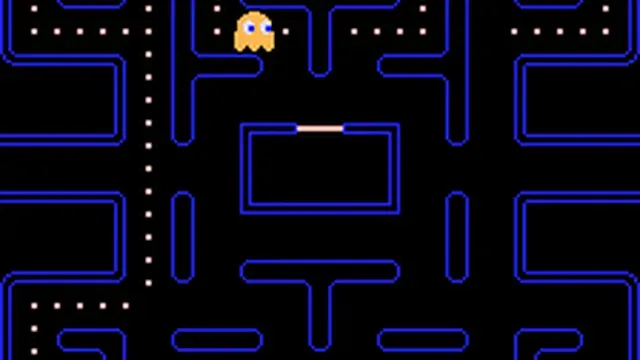
Pac-Man, originally titled Puck Man in Japan, is a 1980 maze video game developed and published by Namco for arcades. It was released in Japan on May 22, 1980 and by Midway Manufacturing in North America in October 1980. The player controls Pac-Man, who must eat all the dots inside an enclosed maze while avoiding four colored ghosts. Eating large flashing dots called "Power Pellets" causes the ghosts to temporarily turn blue and vulnerable, allowing Pac-Man to eat the ghosts for bonus points. Pac-Man was designed by Toru Iwatani, who led a nine-man team; the game's development began in early 1979. Iwatani wanted to create a game that could appeal to women as well as men, because most video games of the time had themes that appealed to traditionally masculine interests, such as war or sports. Although the inspiration for the Pac-Man character was the image of a pizza with a slice removed, Iwatani has said he rounded out the Japanese character for mouth, kuchi (Japanese: 口). The in-game characters were made to be cute and colorful to appeal to younger players. The original Japanese title of Puck Man was derived from the Japanese phrase paku paku taberu, which refers to gobbling something up; the title was changed to Pac-Man for the North American release due to fears of vandals defacing cabinets by converting the P into an F, as in fuck. Pac-Man is regarded as one of the most influential and greatest video games of all time. It was a widespread critical and commercial success, leading to several sequels, extensive merchandise, and two television series, as well as a hit single, "Pac-Man Fever", by Buckner & Garcia. The character of Pac-Man became the official mascot of Namco and later Bandai Namco Entertainment. The game remains one of the highest-grossing and best-selling video games, generating more than $14 billion in revenue (as of 2016) and 43 million units in combined sales, and retains an enduring commercial and cultural legacy.
Source: Wikipedia CC BY-SA 4.0 — Pac-Man · retrieved October 19, 2026
Fields on this page come from the catalog record and recorded sources. No popularity or rating claims are added.
- Wikidata / Q173626 live · October 12, 2026
- wikipedia (en) / Pac-Man live · October 19, 2026
- wikipedia (id) / Pac-Man live · October 19, 2026
- Developer
- Namco
- Publisher
- Midway Games, Namco
- First release
- May 22, 1980
- Series
- Not recorded
- Cover
- Official thumbnail
- Record ID
- Q173626
TIME SHELF